Research
Evidence at the Core of LEaP
LEaP was developed to address the increasing demand for early intervention services and long therapy waitlists. Backed by rigorous research and developed in partnership with families, professionals, and policymakers, LEaP combines evidence-based practice with real-world application.
How LEaP Was Developed
LEaP was designed and evaluated over five years through a doctoral research project led by Dr. Jodie Armstrong in collaboration with Curtin University and the Western Australian Child Development Service. It involved:
- Over 150 stakeholders consulted: Families, practitioners, and policymakers
- Multiple development phases: Ensuring clinical relevance and family-centred design
Research Stages
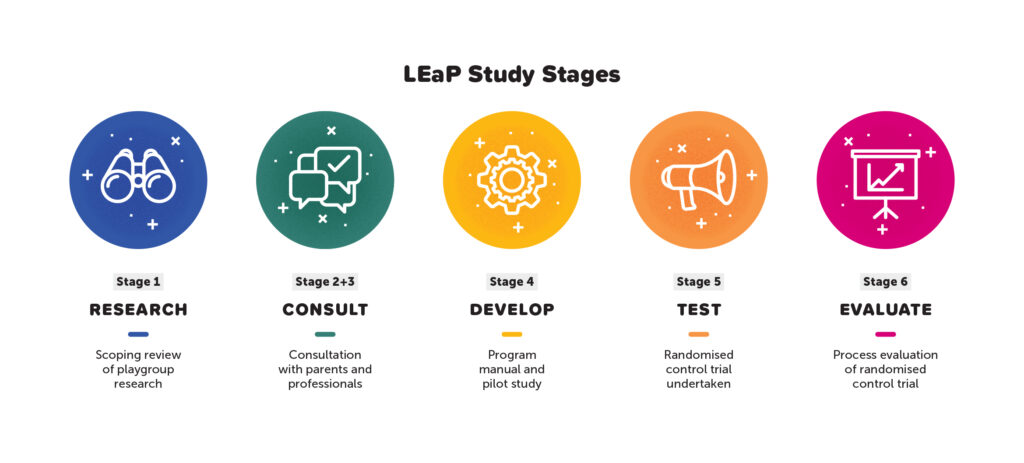
LEaP was developed through a six-stage research process from 2015 to 2020:
- Stage 1: Scoping review of playgroup literature
- Stage 2 and 3: Parent and professional consultation to identify key playgroup components
- Stage 4: Development and pilot testing of the LEaP model
- Stage 5 and 6: Randomised controlled trial and detailed process evaluation
Key Findings
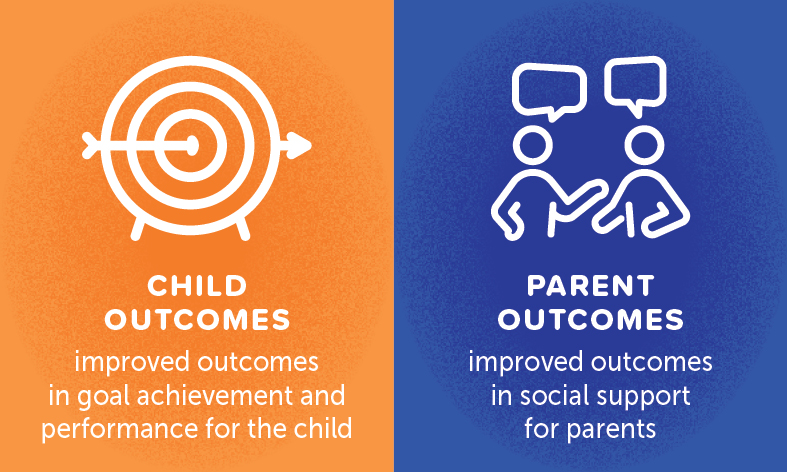
Research confirmed LEaP delivers measurable benefits for children and families:
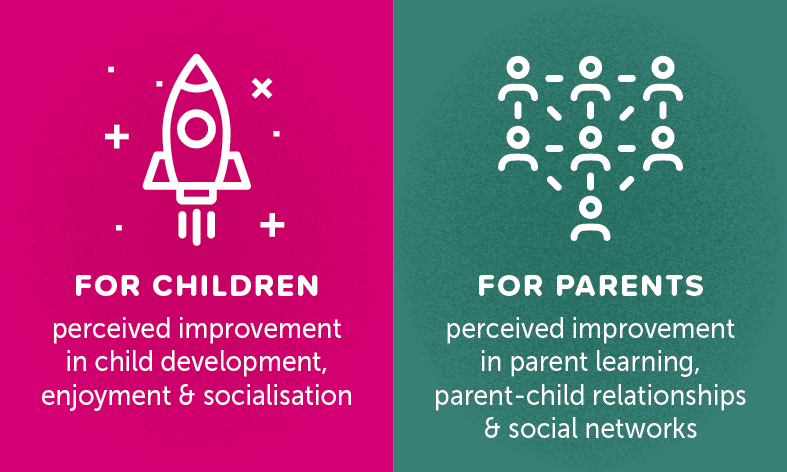
- Greater goal achievement: More children achieved developmental goals than in usual care
- Improved family support: Families reported higher levels of support compared to usual care
- Positive child outcomes: Children made gains in communication, play, and social interaction skills
- Enhanced parent skills: Parents learned practical strategies to support learning and development
- Stronger parent-child relationships: Increased connection and engagement between parents and children
- Community connections: Families built meaningful peer networks and social support
What the data told us
What parents and facilitators told us
What Parents Said:
You weren’t judged, everyone was there for the same reason, everyone was supported, everyone was guided and everyone was helped.’ 1
- Armstrong J. The development and evaluation of a therapeutic playgroup for children with developmental delay. Doctoral Thesis. Doctoral thesis. Western Australia: Curtin University, 2020.
‘It’s quite fun and relaxing. It’s a good way to get him to know other kids with a similar problem and learn from the other parents.’1
- Armstrong J. The development and evaluation of a therapeutic playgroup for children with developmental delay. Doctoral Thesis. Doctoral thesis. Western Australia: Curtin University, 2020.
‘LEaP gives you ideas; it’s given me ideas on things to play with my child. We saw what he likes and didn’t like. The structure is great.’ 1
- Armstrong J. The development and evaluation of a therapeutic playgroup for children with developmental delay. Doctoral Thesis. Doctoral thesis. Western Australia: Curtin University, 2020.
The Research Team
LEaP was developed and tested by a multidisciplinary team of health and academic experts using a rigorous, evidence-based framework This ensured it is both clinically sound and practical in real-world settings.
Research Team (Positions held during the study)
-

Dr Jodie Armstrong Dr. Jodie Armstrong: Occupational Therapist, PhD; Curtin University and Child and Adolescent Health Service, WA
- Professor Sonya Girdler: School of Allied Health, Curtin University
- Professor Catherine Elliott: Chair of Allied Health; Curtin University and Child and Adolescent Health Service, WA
- Dr. John Wray: Consultant Paediatrician, Medical Director; Child Development Service, WA
- Emma Davidson: Director, Child Development Service, WA
- Joanne Mizen: Senior Project and Portfolio Officer, Child and Adolescent Health Service, WA
Research Publications
LEaP has produced five peer-reviewed papers and a doctoral thesis, including:
- Armstrong J, Paskal K, Elliott C, Wray J, Davidson E, Mizen J, & Girdler S. What makes playgroups therapeutic? A scoping review to identify the active ingredients of therapeutic and supported playgroups. Scandinavian Journal of Occupational Therapy. 2018: 1–22.
- Armstrong J, Elliott C, Davidson E, Mizen J, Wray J, Girdler S. The power of playgroups: Key components of supported and therapeutic playgroups from the perspective of parents. Australian Occupational Therapy Journal. 2021, 68(2):144-155.
- Armstrong J, Elliott C, Davidson E, Mizen J, Wray J, Girdler S. Defining therapeutic playgroups: Key principles of therapeutic playgroups from the perspective of professionals. Journal of Child and Family Studies. 2019: 1–15.
- Armstrong J, Pieterse B, Elliott C, Wray J, Davidson E, Mizen J, & Girdler S. The development and feasibility of a manualised therapeutic playgroup for children with developmental delay. The Journal of Child and Family Studies. 2021,30(1):1-16.
- Armstrong J, Girdler S, Wray J, Davidson E, Mizen J, & Elliott C. Randomised controlled trial of a therapeutic playgroup for children with developmental delays. Journal of Autism and Developmental Disorders, 2020; July 4.
- Armstrong J. The development and evaluation of a therapeutic playgroup for children with developmental delay. Doctoral Thesis. Doctoral thesis. Western Australia: Curtin University, 2020.
Future Research
LEaP is committed to continuous innovation to meet the needs of diverse communities. Our research priorities include:
- Cultural and geographic adaptations: Expanding LEaP for different community contexts
- Scalability and sustainability: Research to ensure effective large-scale implementation
- Collaboration: Partnering with national and international researchers
Interested in research partnerships or program development? Contact us at contact@leapplaygroup.com